
Are you confused about the hype surrounding the digital twins frontier? You’re not alone. Many people hear the term and think it’s just another tech buzzword.
But really, it’s changing how we interact with technology and data.
I’ve spent time digging into what digital twins can do for industries. They create virtual replicas of physical systems that help businesses improve processes. This isn’t just theoretical.
Companies are seeing real benefits.
In this article, I’ll break down what digital twins are and why they matter. You’ll get straightforward takeaways into their applications, from manufacturing to healthcare.
I’ll share my perspective on how they can boost efficiency and reduce costs. By the end, you’ll understand how this technology might impact your life and business. Trust me, it’s worth knowing about.
If you want to stay ahead in today’s tech space, keep reading.
Virtual Twins: Beyond the Digital Frontier
Virtual twin technology is a game-changer. It’s a highly sophisticated, changing digital replica of a physical asset, process, or system. Imagine having a digital version of a factory or a city that updates in real-time.
That’s what we’re talking about here. The core purpose? Real-time data synchronization, advanced simulation, and predictive analysis.
It’s all about optimization, monitoring, and control.
But how are virtual twins different from the broader “digital twins” concept? Virtual twins offer advanced, often AI-driven simulations. They’re not just static models.
They predict and simulate outcomes in a complete way. It’s like having a crystal ball, but one that relies on data and algorithms instead of magic.
Let’s get into the nuts and bolts. IoT sensors collect data. AI and ML handle analysis and prediction.
And cloud computing infrastructure processes and stores all this info. It’s a living system. Virtual twins continuously learn and evolve with new data.
They provide increasingly accurate takeaways as they adapt, making them useful in the digital twins frontier.
So, does this technology matter? Absolutely. It’s reshaping industries by offering unprecedented control and foresight.
That’s the real power of virtual twins.
Tracing the Evolution: Key Milestones in Virtual Twin Development
When I think about digital twins, I can’t help but recall NASA’s Apollo program. They laid the groundwork for these virtual wonders. Early conceptions of digital twins were more about problem-solving than prediction.
Technology, though, didn’t sit still. The miniaturization of sensors and increased processing power transformed those rudimentary concepts into complex systems. We’re talking leaps and bounds, not baby steps.
Remember when internet connectivity wasn’t everywhere? Hard to imagine now, right?
Big data analytics played a massive role in this evolution. With the development of advanced simulation software, digital twins began modeling detailed behaviors. They moved from just being representations to becoming predictive powerhouses.
Early adopters in manufacturing and aerospace knew this firsthand. They saw the potential in optimizing processes and predicting future outcomes.
Fast forward to the convergence of IoT, AI, and cloud technologies in the 2010s. This was a game-changer, pushing virtual twins into a new area. They went beyond monitoring to actively predicting and controlling systems.
It’s the digital twins frontier, a place where technology continuously reshapes itself. Oh, and speaking of reshaping, check out the latest on autonomous vehicles current insight. It’s a wild ride.
Virtual Twins: The New Frontier
Let’s talk about the power of real-time data integration and analytics. Imagine a world where your virtual twin gets instant feedback from its physical counterpart. It’s not science fiction.
It’s happening now. These feedback loops aren’t just fancy jargon (they) give virtual twins the edge in accuracy and responsiveness. Ever wonder how that’s possible?
Advanced analytics, my friend. They crunch numbers faster than you can blink.
Then there’s the buzz around advanced AI and machine learning models. Deep learning and its buddies, like reinforcement learning and generative AI, are game changers. They boost predictive maintenance and anomaly detection.
Who knew AI could be this clever? It’s like having a crystal ball for scenario planning and optimization.
Simulation and modeling capabilities have taken a leap too. Hyper-realistic simulations now predict complex system behaviors with uncanny precision. Try testing a ‘what-if’ scenario without breaking a sweat.
These simulations are like living in a sci-fi movie, just without the aliens.
Now, to cloud-native and edge computing architectures. They make virtual twins flexible and low-latency. It’s a digital twins frontier that’s accessible to all.
Finally, interoperability and standardization efforts can’t be ignored. Common protocols and data formats are the unsung heroes, enabling smooth integration across virtual twin ecosystems. It’s about time, right?
Without them, we’d be stuck in the digital dark ages.
Digital Twins Frontier: Revolutionizing Industries
In manufacturing, digital twins are a game changer. Imagine optimizing production lines and predicting machinery breakdowns before they happen. It’s all about prevention, not reaction.

You can virtually design factory layouts, boosting supply chain resilience.
Healthcare? It’s an entirely different beast. Virtual twins are used for personalized medicine.
A “virtual heart” can tailor treatment to a patient. Surgical planning and drug discovery? Faster and more precise.
Hospitals run smoother too. Efficiency isn’t just a buzzword here.
Urban planning benefits massively from digital twins. Smart cities are no longer just a concept. Simulate traffic flow and energy consumption.
Predict when public utilities need maintenance. Real-time management of smart grids keeps everything in check. It’s like living in a sci-fi movie.
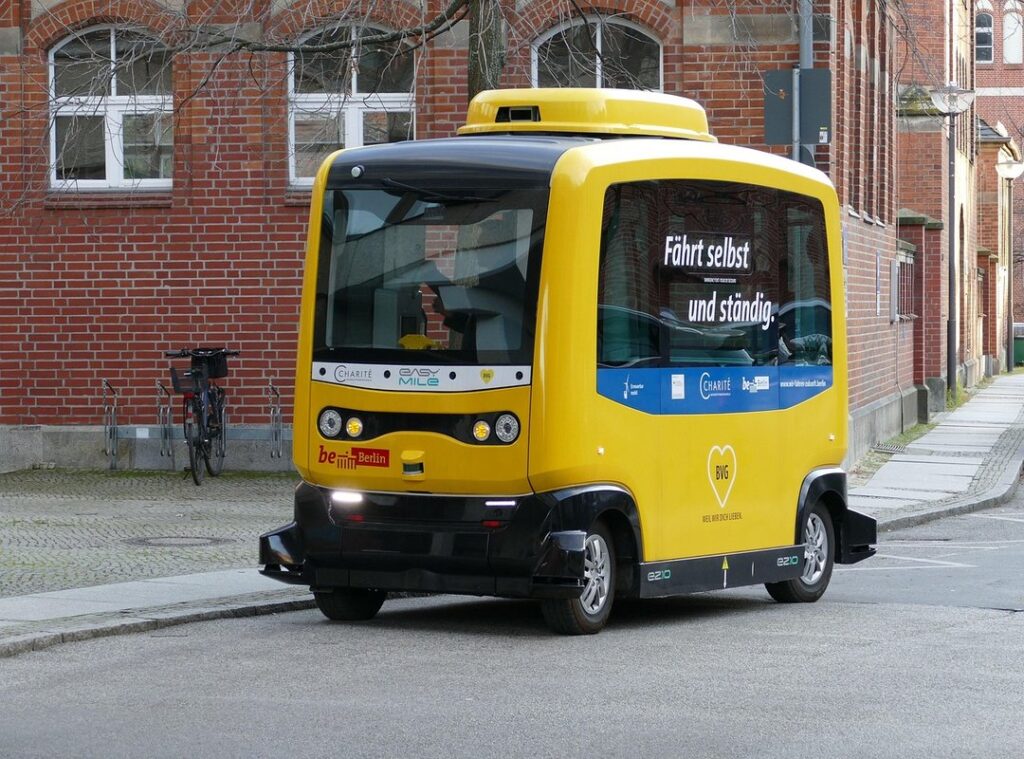
In aerospace and automotive, digital twins are indispensable. Testing vehicle designs virtually saves money and time. Aircraft performance optimization is done in real-time.
Complex engines? Predictive maintenance ensures they don’t fail mid-air. Autonomous driving development accelerates too.
It’s innovation on wheels (or wings).
Retail and consumer goods aren’t left out either. Virtual twins improve store layouts and manage inventory like never before. Customers get personalized experiences, thanks to virtual try-ons.
Supply chain transparency from production to shelf is enhanced.
These examples highlight how industries are pushing the boundaries of what’s possible. The digital twins frontier isn’t just about technology. It’s about a paradigm shift in operations.
Are you ready for it?
Virtual Twins: Navigating the Digital Frontier
Tackling the current challenges of virtual twins is no small feat. Data security and privacy loom large. Who wants their data floating around unsecured?
Massive datasets require immense computational power, and integrating outdated systems? It’s a nightmare. Let’s not even start on those initial costs.
And yes, the talent gap is real. Finding folks with expertise in AI and cybersecurity? Like hunting unicorns.
We need them to make these systems thrive.
But look ahead. The future of virtual twins is exciting. Think hyper-personalization, self-optimization, and maybe even a dance with the metaverse.
Imagine virtual twins not just predicting but autonomously fixing issues. It’s like having a digital handyman.
Yet, the ethical dilemmas can’t be ignored. Who owns your data? What about algorithmic bias?
These systems will shape decisions. Check out the power of big data exploration for more on this digital twins frontier.
Step into the Future
Virtual twin technology isn’t just a fad. It’s a game-changer that’s reshaping efficiency and innovation across all sectors. I know it’s hard to keep up with fast-moving tech, and that’s why this analysis cuts through the noise.
You need clarity, and I’ve provided it. Explore the potential of virtual twins in your area. Stay engaged with trusted sources to grasp the latest in the digital twins frontier.
Don’t get left behind. Act now and start your journey into this big tech.
 Founder & Chief Executive Officer (CEO)
Strato Triantaellis is the founder of ElectRentertainment.com, a platform dedicated to delivering the latest in technology trends, innovative gadgets, and digital entertainment breakthroughs. As the driving force behind the company, he defines its vision, strategy, and long-term direction, ensuring it stays aligned with innovation in the tech and entertainment space. He oversees operations from the Shreveport, Louisiana headquarters, where he manages partnerships, brand development, and overall growth. With a strong passion for emerging technologies and digital media, Strato focuses on building a platform that connects users with cutting-edge advancements in gadgets, software, and online entertainment. His leadership is centered on innovation, creativity, and expanding the company’s global reach.
Founder & Chief Executive Officer (CEO)
Strato Triantaellis is the founder of ElectRentertainment.com, a platform dedicated to delivering the latest in technology trends, innovative gadgets, and digital entertainment breakthroughs. As the driving force behind the company, he defines its vision, strategy, and long-term direction, ensuring it stays aligned with innovation in the tech and entertainment space. He oversees operations from the Shreveport, Louisiana headquarters, where he manages partnerships, brand development, and overall growth. With a strong passion for emerging technologies and digital media, Strato focuses on building a platform that connects users with cutting-edge advancements in gadgets, software, and online entertainment. His leadership is centered on innovation, creativity, and expanding the company’s global reach.